
Chapter Text
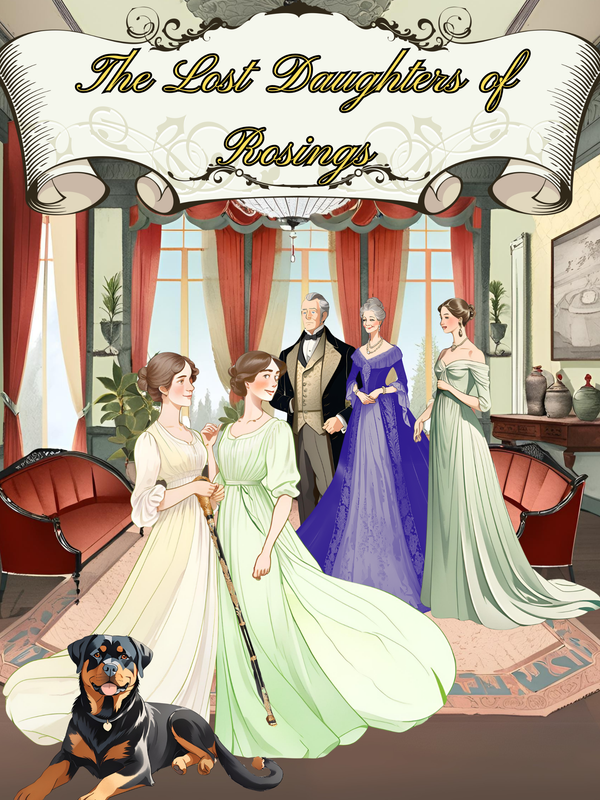
Rosings Park
May 15th, 1791
Evening settled over Rosings Park with a tense stillness, broken only by the distant crackle of a fire in the hearth and the muffled sounds from Lady Catherine's bedchamber. Lady Catherine de Bourgh had been in labor for several hours, her cries of pain echoing faintly through the grand halls. Below stairs, Sir Lewis de Bourgh paced back and forth in the drawing room, his brother Reginald de Bourgh sitting stiffly in a nearby chair. The tension in the air was palpable. Untouched glasses of brandy lay on the side table, forgotten as the room's two occupants' minds focused on the current condition of the estate’s mistress.
“Should it truly take this long?” Reginald asked, breaking the silence. Clearly not performing his role of soothing the expectant father.
Sir Lewis, jaw tight, did not reply immediately. He stopped pacing, gazed silently into the fire for a moment, and then sighed. “It is not my place to question such matters.The midwife has said before that the length of time a birth takes varies from mother to mother. We must simply stay here and wait” he said curtly, though his furrowed brow betrayed his unease.
Upstairs, Lady Catherine clutched the bed frame as another contraction wracked her body. The midwife, a seasoned woman with a calm demeanor, issued instructions to her assistant, her own daughter, who worked diligently by her side.
“Replace the cloth you are using to wipe the perspiration Eliza. Do not dampen it too much.” the midwife said before turning to the mistress of Rosings. “Breathe, Lady Catherine. It won’t be long now,” the midwife assured her, though the labor had already dragged on for hours. The midwife could see the babe was nearly ready to be born.
Lady Catherine groaned as the midwife got into position to deliver the child. Lady Catherine’s face was pale but determined. Her strength was flagging, however her resolve remained unbroken. She would safely deliver her babe, even if it took all the breath from her body.
After what felt like an eternity, the silence punctured only by Lady Catherine’s shouts of pain, a sharp cry split the air. The midwife held up a small, squalling baby, her face breaking into a smile.
“A girl,” she announced. “A healthy daughter.”
Relief flooded Lady Catherine’s features, and she let out a shaky breath. “A girl,” she murmured. “She is perfect.”
The midwife handed the infant to her daughter, who began cleaning and wrapping the baby. Lady Catherine leaned back against the pillows, exhausted but content.
Then, without warning, another wave of pain coursed through her. Her eyes flew open in alarm. “What—what is happening?” she gasped, fearing the worst.
The midwife’s brow furrowed as she quickly assessed Lady Catherine. Her eyes widened in surprise. “My lady, there is another child!”
“Another?” Lady Catherine’s voice was weak, disbelieving. “No… no, there cannot be. Tis not possible, there are no twins born to neither the Fitzwilliam nor de Bourgh line in living memory…”
“There is no mistake, my lady, and a lack of twins in one's lineage does not necessarily render the possibility of twins impossible,” the midwife said firmly. “You must summon your strength once more.”
Though utterly drained, Lady Catherine had no choice but to comply. The labor began anew, and after what felt like an eternity of pain and effort, a second cry filled the room. The midwife lifted the second child, her expression shifting as she noticed something unusual.
“A second daughter,” she announced, though her tone was more reserved this time.
Lady Catherine, gasping for breath, barely heard the words. Her vision blurred, and moments later, she succumbed to exhaustion, sinking into unconsciousness.
The midwife handed the second baby to her assistant, her sharp eyes catching the distant unresponsive gaze of the infant. She waved her hand in front of the baby’s face.
No reaction. She snapped her fingers and the baby squirmed at the sound. Once again she slowly waved her hand in front of the infant's face, the irises did not move or falter. Her heart sank.
“This one… she is blind,” the midwife whispered. Her daughter’s eyes creased in sympathy, though it was clear she was not fully attending as exhaustion lined her features..
“What shall we do?” her daughter asked, her voice weary.
The midwife’s face hardened. She had seen how noble families treated children who were not perfect. A blind child in this household… She feared for the girl's wellbeing, but there was nothing to be done…perhaps if they decided to abandon the blind child she could take it to an orphanage she knew that assisted disabled children. Though the establishment suffered from a lack of funds, it never turned a child away.
“Stay here,” she ordered. “I will speak with Sir Lewis.”
The midwife descended to the drawing room, her footsteps light but her resolve heavy. As she approached the door, she heard the voices of Sir Lewis and his brother.
“What will you do if the child is sickly like Anne? Or another girl?” Reginald asked bluntly.
Sir Lewis’s voice was tight. “Heaven forbid! I should hope Lady Catherine is able to produce at least one healthy heir. What use have I for more sickly children? And one girl is quite enough to worry about!”
The midwife froze, her blood running cold. The callousness of Sir Lewis’s words confirmed her worst fears. Taking a steadying breath, she entered the room.
“Well?” Sir Lewis demanded, rising to his feet.
“Her Ladyship is resting,” The midwife said, keeping her voice level. “The labor was long, but she will recover.”
“And the child?”
“Twins,” The midwife replied, lowering her eyes. “But…” She hesitated, letting her voice waver. “They were stillborn.”
“Stillborn?” Sir Lewis’s face hardened into an unreadable expression. “Both of them?”
“Yes, sir,” The midwife said quickly. Anxiety pooling in her stomach.
Sir Lewis swore under his breath, pacing the room. “And my wife? Does she know?”
“She saw them, sir,” The midwife admitted, choosing her words carefully. “however her ladyship remains unaware of their condition. She lost consciousness shortly after the second was born." The midwife hoped that if Lady Catherine recalled anything of the birth, then she could easily be persuaded she was mistaken in the babies being alive when she birthed them.
“Perhaps it is for the best,” Sir Lewis muttered. “Best she not be informed just yet, at least until she can recover further. See to their burial immediately.”
“As you wish, sir,” The midwife said, bowing slightly.
“Wait,” Sir Lewis called after her. “What were they?”
“Girls,” The midwife answered without hesitation before slipping from the room.
Returning to Lady Catherine’s chambers, she found Eliza waiting with the babies.
“What did he say?” Eliza asked wearily.
The midwife ignored the question, her expression resolute. “Take the children,” she ordered, her voice firm.
Eliza’s eyes widened. “What? Mother, we cannot—”
“Do as I say!” The midwife snapped.
“But it is kidnapping!” Eliza protested, her voice rising. “We shall be hanged for taking the swaddling cloths at the very least if we are caught!”
“If we leave them here, they shall be mistreated—or worse,” The midwife said sharply. “I told Sir Lewis they were stillborn. If he discovers the truth, it will be my life on the line. Do you understand me?”
Eliza swallowed hard, fear flickering in her eyes. Reluctantly, she gathered the infants, wrapping them carefully.
“Out the servant’s door,” The midwife instructed. “The household is asleep save for the butler and housekeeper. Go quickly.”
Eliza hesitated for only a moment before nodding. Cradling the twins, she slipped out into the cool predawn air. Her mother followed shortly after, her heart pounding as she directed the waiting coachman.
“To London,” she ordered, her voice trembling slightly. “And make haste.”
As the carriage rumbled away from Rosings Park, the first rays of dawn illuminated the countryside, marking the beginning of a perilous journey—and an uncertain future—for the twin girls.
~~~
The heavy oak door clicked shut behind the midwife, leaving Sir Lewis de Bourgh and his younger brother, Reginald, alone in the dimly lit drawing room. The tension in the air was palpable, a suffocating silence lingering in the wake of the grim news. Sir Lewis stood by the hearth, one hand gripping the mantelpiece, his knuckles white. His other hand trembled at his side, betraying the storm of emotions he worked so hard to suppress. Stillborn, he knew not how he would tell his wife; they had suffered many disappointments already since Anne’s birth. And Catherine had taken every necessary precaution so as not to endanger the child.
“Well,” Reginald began awkwardly, clearing his throat. “This is... unfortunate news.” Truth be told, Reginald felt unequal to providing solace to his brother. Reginald de Bourgh had one son thus far, but did not suffer the same affliction as his brother, of caring deeply for his child or wife.
Sir Lewis didn’t reply. He stared into the dying embers of the fire, his face set in a stony mask.
“I am sorry for your loss, brother,” Reginald added, though the words felt hollow even as he said them. He shifted uneasily in his chair, clearly out of his depth. After a beat, he attempted a smile. “But... you did say you needed no more girls, did you not?” Surely this would be some comfort to his grieving brother?
The words hit Sir Lewis like a blow to the abdomen. He turned sharply, his eyes blazing with anger. “I know what I said, Reginald ,” he snapped, his voice cold and biting. “Do not twist my meaning.”
Reginald raised his hands defensively. “I only meant—” here he was cut off by his older brother.
“I know very well what you meant,” Sir Lewis interrupted, his voice rising as his face darkened. He began to pace the room, his movements sharp and agitated. “When I said I did not need more girls, I was speaking of the future. The endless talks of fripperies, of gowns and fashions. The constant worry over their safety, their reputations, their prospects. And yes,”—he turned to glare at his brother—“the inevitability of handing them off to men who could never be worthy of them. Do you understand that, Reginald? No man would ever be worthy of one of my daughters, not while I draw breath.”
Sir Richard blinked, clearly taken aback. “I—” once again whatever he might have said was halted by his brother speaking.
“But,” Sir Lewis continued, his voice breaking slightly as he sat down heavily in the chair by the fire, “I would have taken all of it. Every argument over ribbons, every sleepless night worrying over their futures. I would have fought off suitors by the dozen.” He looked down at the polished surface of the table before him, his hands clenched into fists. His voice dropped to a near-whisper. “If only they had lived.”
The room fell into a tense silence. The fire crackled softly in the hearth, casting flickering shadows across Sir Lewis’s face. He stared down at the table, his jaw tight, his expression one of profound grief.
“I would have loved them,” he said quietly, almost to himself. “I would have loved them with all my heart, just as I love Anne.”
Reginald shifted uncomfortably in his chair, his own unease evident. He had never been particularly involved in the upbringing of his own son, a distant father who left much of the boy’s care to others. He struggled now to find the right words to soothe his brother, however they escaped him, as he was quite sure if his wife bore a girl he would have nothing to do with her upbringing at all, that was his wife’s job, and he would have no involvement beyond paying the bills for their purchases. He was also quite sure he would be willing to hand a daughter over to any respectable suitor who presented themselves.
“Well,” he said after a moment, “you and Catherine are still young enough. You can always have more children.”
Sir Lewis’s head snapped up, his eyes narrowing in fury. “Get out,” he said, his voice low and trembling with suppressed rage.
“Lewis, I—”
“Get. Out.”
The weight behind the words left no room for argument. Reginald stood, his chair scraping against the wooden floor, and gave his brother a tight nod. Without another word, he retreated from the room, closing the door softly behind him.
Once alone, Sir Lewis leaned forward in his chair, his head falling into his hands. The walls of his carefully constructed composure began to crumble as the enormity of the loss settled over him. For all his outward stoicism, his heart ached for the daughters he would never get to hold, to guide, to love.
The fire in the hearth sputtered as the last of the embers died, leaving the room cloaked in shadows. Sir Lewis remained seated, unmoving, grief etched into every line of his face.
~~~
13 Gracechurch St, London
May 15th, 1791
The spring sun cast a warm glow over the streets of London, but the air inside the Gardiners’ townhouse felt cold and heavy. For months, Mrs. Bennet had sunk into a melancholy so deep that even her bright disposition seemed like a distant memory. She had always dreamed of a bustling household filled with children’s laughter, but after losing several babies to miscarriage, that dream felt like it was slipping away. Nothing, not even the presence of her cherished daughter had been sufficient to rouse her from her grief.
After Jane’s healthy birth nearly two years ago, the losses that followed weighed heavily on her not only mentally, but physically as well. The local apothecary and midwife had both advised her to stop trying for a child for a time, to let her body recover sufficiently. Mrs. Bennet had refused to believe them. How could they understand her yearning? Her need for a large family? Mr. Bennet, worried for her health due to her refusal to believe the apothecary and midwife’s words, had suggested they seek a second opinion in London. Thankfully Mrs Bennet agreed, fully convinced that the advice they had been given must have been in error.
The London physicians and midwives renowned for their expertise were sought out as soon as the Bennets had arrived at the Gardiners, and yet their verdict was the same. Two doctors and a midwife all delivered the same advice: if she wanted to safeguard her health—and perhaps even her life—she must refrain from trying for more children for several years. The news had crushed her.
Nearly a week had passed and Mrs. Bennet had been completely inconsolable, retreating into herself even more than she had previously done; she refused food, conversation, and even the comforting presence of her husband, brother and sister in law.
Mr. Bennet, who loved his wife deeply despite her excitable nature, grew increasingly concerned. He sought out yet another doctor, this time to address her growing depression. The physician, a thoughtful man with a quiet voice, listened intently as Mr. Bennet described his wife’s plight.
“She seems to have lost her purpose,” Mr. Bennet admitted. “She has always seen herself as a mother, the heart of a large family. Without that hope, she…” He trailed off, unable to articulate the depth of his fears. Truth be told he was deeply fearful that his wife would allow herself to waste away. She had not eaten a single morsel since the last doctor's verdict and drank very little.
The doctor nodded sagely. “What your wife needs, Mr Bennet, is not merely rest or time. She needs children to care for. A mother’s heart does not easily mend without a child to love and care for. If your wife is agreeable, perhaps you might adopt. I know of an orphanage that cares for the children they take in to the best of their abilities, unfortunately it suffers from a lack of funds. They are always eager to have the children placed with respectable families.”
Mr. Bennet considered the suggestion. It was unconventional, perhaps even controversial in some circles, but the idea began to take root. That evening, he approached his wife with a tenderness born of years of affection. Sitting beside her in their shared room, he took her hand gently in his.
“My dear,” he began softly, “I have been thinking. There are so many children in this world who are in need of love. Perhaps… Perhaps we might consider adopting a child.”
The effect was immediate. For the first time in weeks, Mrs. Bennet’s eyes lit up with a spark of life. “Adopt?” she repeated, her voice tinged with hope. “Do you truly mean it, Mr. Bennet?”
“I do,” he assured her, relief washing over him at her sudden animation. “There is an orphanage here in London that the doctor spoke of. Shall we visit it tomorrow?”
Mrs. Bennet clasped his hands tightly, tears streaming down her cheeks. “Yes, yes! Oh, Mr. Bennet, I would love nothing more.”
~~~
St Benedicts Orphanage, London
May 16th, 1791
The next morning, they arrived at the orphanage, a modest but well-kept building on the outskirts of the city. The caretaker, a kindly woman with sharp eyes and a no-nonsense demeanor, greeted them warmly.
“You’ve come on quite the day,” she said, leading them to the nursery. “Just this morning, two newborn girls were brought to us. Twins, it seems, though they were abandoned with only a small note, indicating only which was the eldest. No names, date of birth, though we suspect it was likely last night due to their condition, but otherwise there was nothing that gave an explanation as to who the children were.”
The Bennets exchanged a glance, their curiosity piqued. “Twins?” Mrs. Bennet murmured, already feeling a pull toward the unseen infants.
“Yes,” the caretaker confirmed. “A wet nurse has been tending to them, but there are several other babes and she cannot manage so many at once. If you are interested, you could take them both. I must warn you, though,” she added, her tone cautious, “one of the girls is blind.”
Mrs. Bennet drew in a sharp breath, but her resolve did not waver. “That does not matter to us,” she said firmly. “We will love them both.”
Mr Bennet knew from the moment the caretaker had mentioned the two girls that they would be bringing those precious girls home .
When the twins were brought in and presented to them, tiny and swaddled in fine blankets, Mrs. Bennet’s heart melted. One of the babies squirmed with all her might and let out a soft cry, while the other merely waved her arms around letting out small huffs, her unfocused gaze a testament to the truth of the caretakers earlier warning. Yet to Mrs. Bennet, they were perfect.
On the carriage ride back to the Gardiners’ home, Mrs. Bennet could not stop cooing over the babies. She marveled at their tiny fingers and the downy softness of their thin tufts of dark brown hair. “Look at them, Mr. Bennet. Are they not the most precious gifts to this world you have ever seen?”
“They are indeed,” Mr. Bennet replied, his own smile soft with affection.
For the first time in weeks, Mrs. Bennet seemed like herself again. She even spoke of being quite famished, a sign of her renewed spirit. “I think I shall have Maddie ask the cook to prepare roast chicken for dinner, for you know how I favour that particular dish.” she declared. “And perhaps a pudding can be produced as well. Oh, Mr. Bennet, I feel as though a sudden burst of energy has come over me.”
Mr. Bennet’s heart swelled with relief and pride. “We have made the right decision, then” he murmured.
Mrs. Bennet, still gazing at the twins, suddenly said, “We must give them names. What shall we call them?”
Mr. Bennet considered for a moment. “The elder shall be Elizabeth, after my mother,” he suggested.
Mrs. Bennet’s eyes lit up. “Oh, yes! Your mother was the kindest woman I have ever known. Elizabeth it shall be.”
She turned her gaze to the second baby, the one who was blind. Her expression grew thoughtful. “And this one… her name will be Lilith.”
Mr. Bennet raised an eyebrow. “Lilith? That is rather… unconventional. Was that not the name of Adam’s first wife, the one who was cast out of Eden?”
Mrs. Bennet smiled, her gaze soft yet determined. “It was, but I once heard a different story. Do you remember the gypsy caravans that came to Hertfordshire some years ago?”
“I do,” he replied, intrigued. The group had been allowed to keep their caravans on Longbourn land for the duration of their stay for a modest sum.
“When my father was busy, I would visit them. I met a woman there who told me an alternate tale of Lilith. She said Lilith was not cast out but chose to leave Eden because she refused to be subservient to Adam. She wanted independence, to live her life on her own terms.”
Mrs. Bennet’s voice softened as she looked at Lilith. “I want our little girl to grow up believing she can defy society’s expectations, that she is no less capable of love, happiness, or a family of her own simply because she cannot see. I want her to know she is just as extraordinary as any other girl.”
Mr. Bennet was deeply moved by his wife’s words. “Lilith it shall be,” he said, his voice thick with emotion. He could do nothing less for the precious girl in his wife’s arms.
Mrs. Bennet looked at both babies, her eyes shining with love. “Elizabeth, Lilith,” she said softly. “I swear to you both, I will love you as much as I love Jane, and as much as I will love any future children we may have.”
In that moment, Mr. Bennet knew they had not only brought two daughters into their lives but had also reclaimed the heart of their family.